

 Image 1 of 3
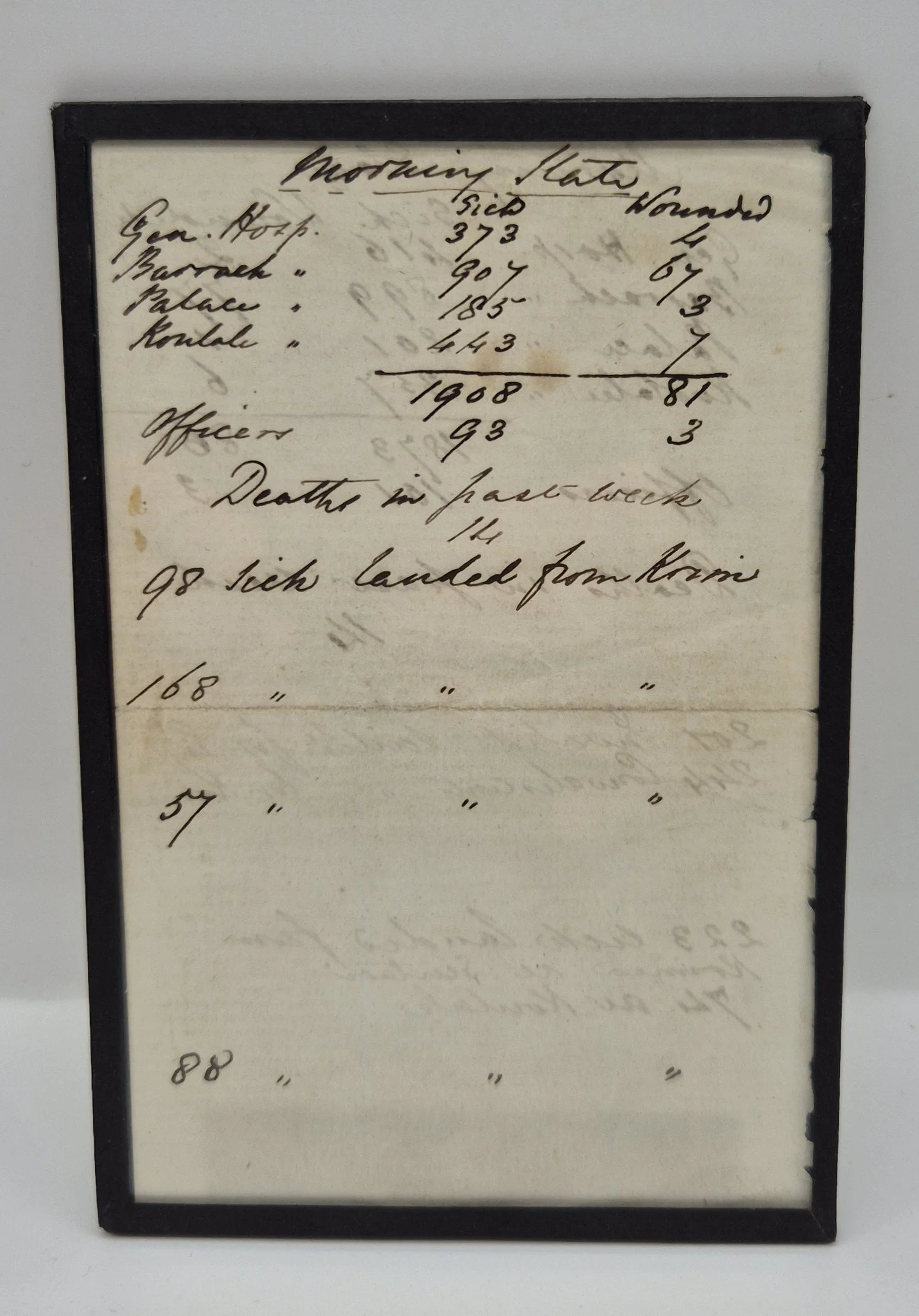 Image 2 of 3
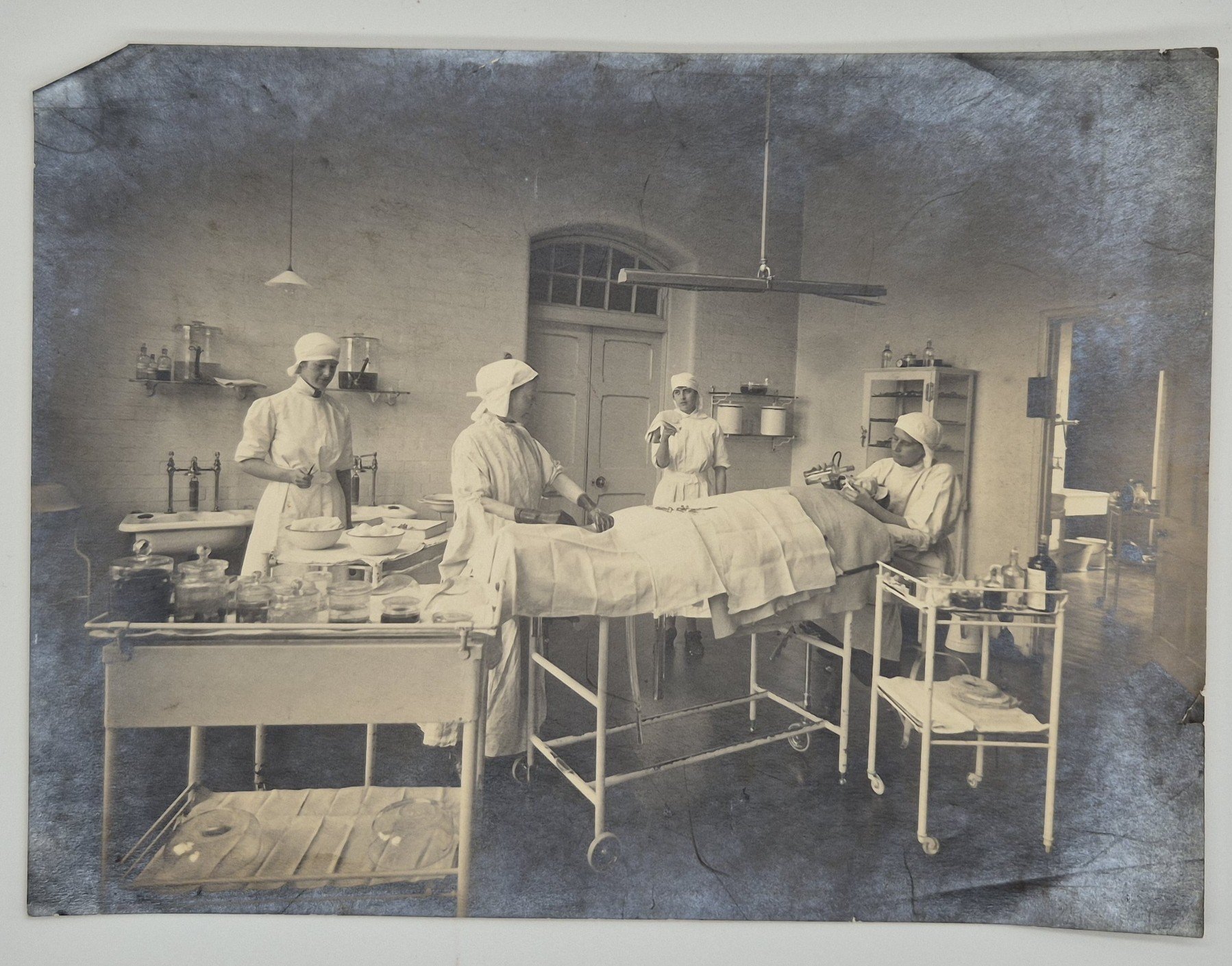 Image 3 of 3
[NIGHTINGALE, Florence]
Single page from a Crimean Nurse’s Diary
[c. 1853-56]
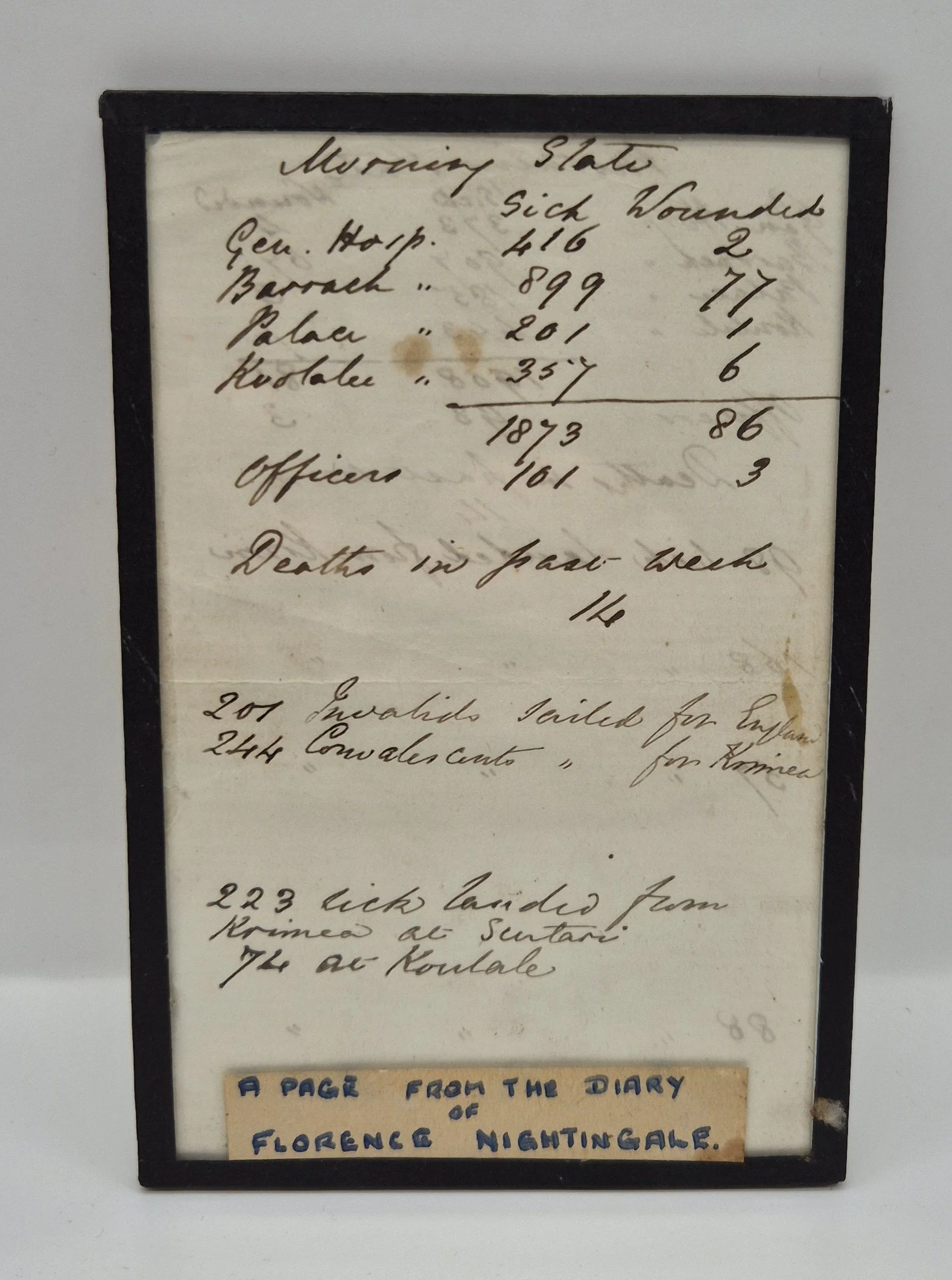
A single sheet, likely extracted from a nurse’s pocket diary, measuring 8 x 12cm approx., glazed with both recto and verso visible, with black tape border; written in black ink in a single hand, showing numbers of the sick and wounded, as well as the number of deaths, all according to their locations; a couple of small brown spots; at some stage folded once horizontally; a later written label ‘A page from the diary of Florence Nightingale’ pasted to one side; clean and legible otherwise.
Both the recto and the verso of this page titled ‘Morning Slate’, with the first side showing a table of sick and wounded according to their locations (Gen. Hosp., Barrack [Hosp.], Palace [Hosp.], and "Koulale [Hosp.]). Beneath, the writer has added the number of officers, the number of deaths in the past week, the number of invalids who sailed for England, and the number of convalescents who sailed for Crimea (Krimea), as well as a note that 223 sick landed from Krimea at Scutari, and 74 at Koulale. To the reverse are similar notes with differing numbers, likely from the following day.
The note comes with a folder of provenance, including a photograph of Helen Josephine Chance (1888-1973), a Red Cross nurse who spent time during the First World War in a military hospital in Salonica in northern Greece, who received the British War Medal and the Victory Medal for her service in 1914-18, and to whom this document previously belonged. The document was planned to be sold during the Covid19 epidemic to raise money for the NHS. It also comes with a series of printed notes in which it is explained that, in 2020, the Daily Mail carried out research which suggests that the note was likely penned by an assistant working at Scutari under Nightingale’s orders. While the writing does bear a strong resemblance to known examples of Nightingale’s penmanship, it may therefore be the work of one of her fellow nurses during the war.
Florence Nightingale arrived in Turkey in 1854, among a company of 38 who were among the first women to officially serve in the army. She was immediately horrified by the conditions in the hospitals, and set about her pioneering work to improve the efficacy of nursing, cleaning hospitals, making sure that men were well fed, and stopping the spread of diseases through methods such as regular handwashing. It was for this particular period in her life that she would later become famous.
Nightingale’s hand or not, this note offers a unique and profound insight into the meticulous and important record-keeping of nurses at Scutari and connected locations such as the Koulali Barrack hospitals, places which were at constant risk of being overwhelmed by outbreaks such as cholera.
[NIGHTINGALE, Florence]
Single page from a Crimean Nurse’s Diary
[c. 1853-56]
A single sheet, likely extracted from a nurse’s pocket diary, measuring 8 x 12cm approx., glazed with both recto and verso visible, with black tape border; written in black ink in a single hand, showing numbers of the sick and wounded, as well as the number of deaths, all according to their locations; a couple of small brown spots; at some stage folded once horizontally; a later written label ‘A page from the diary of Florence Nightingale’ pasted to one side; clean and legible otherwise.
Both the recto and the verso of this page titled ‘Morning Slate’, with the first side showing a table of sick and wounded according to their locations (Gen. Hosp., Barrack [Hosp.], Palace [Hosp.], and "Koulale [Hosp.]). Beneath, the writer has added the number of officers, the number of deaths in the past week, the number of invalids who sailed for England, and the number of convalescents who sailed for Crimea (Krimea), as well as a note that 223 sick landed from Krimea at Scutari, and 74 at Koulale. To the reverse are similar notes with differing numbers, likely from the following day.
The note comes with a folder of provenance, including a photograph of Helen Josephine Chance (1888-1973), a Red Cross nurse who spent time during the First World War in a military hospital in Salonica in northern Greece, who received the British War Medal and the Victory Medal for her service in 1914-18, and to whom this document previously belonged. The document was planned to be sold during the Covid19 epidemic to raise money for the NHS. It also comes with a series of printed notes in which it is explained that, in 2020, the Daily Mail carried out research which suggests that the note was likely penned by an assistant working at Scutari under Nightingale’s orders. While the writing does bear a strong resemblance to known examples of Nightingale’s penmanship, it may therefore be the work of one of her fellow nurses during the war.
Florence Nightingale arrived in Turkey in 1854, among a company of 38 who were among the first women to officially serve in the army. She was immediately horrified by the conditions in the hospitals, and set about her pioneering work to improve the efficacy of nursing, cleaning hospitals, making sure that men were well fed, and stopping the spread of diseases through methods such as regular handwashing. It was for this particular period in her life that she would later become famous.
Nightingale’s hand or not, this note offers a unique and profound insight into the meticulous and important record-keeping of nurses at Scutari and connected locations such as the Koulali Barrack hospitals, places which were at constant risk of being overwhelmed by outbreaks such as cholera.