

 Image 1 of 4
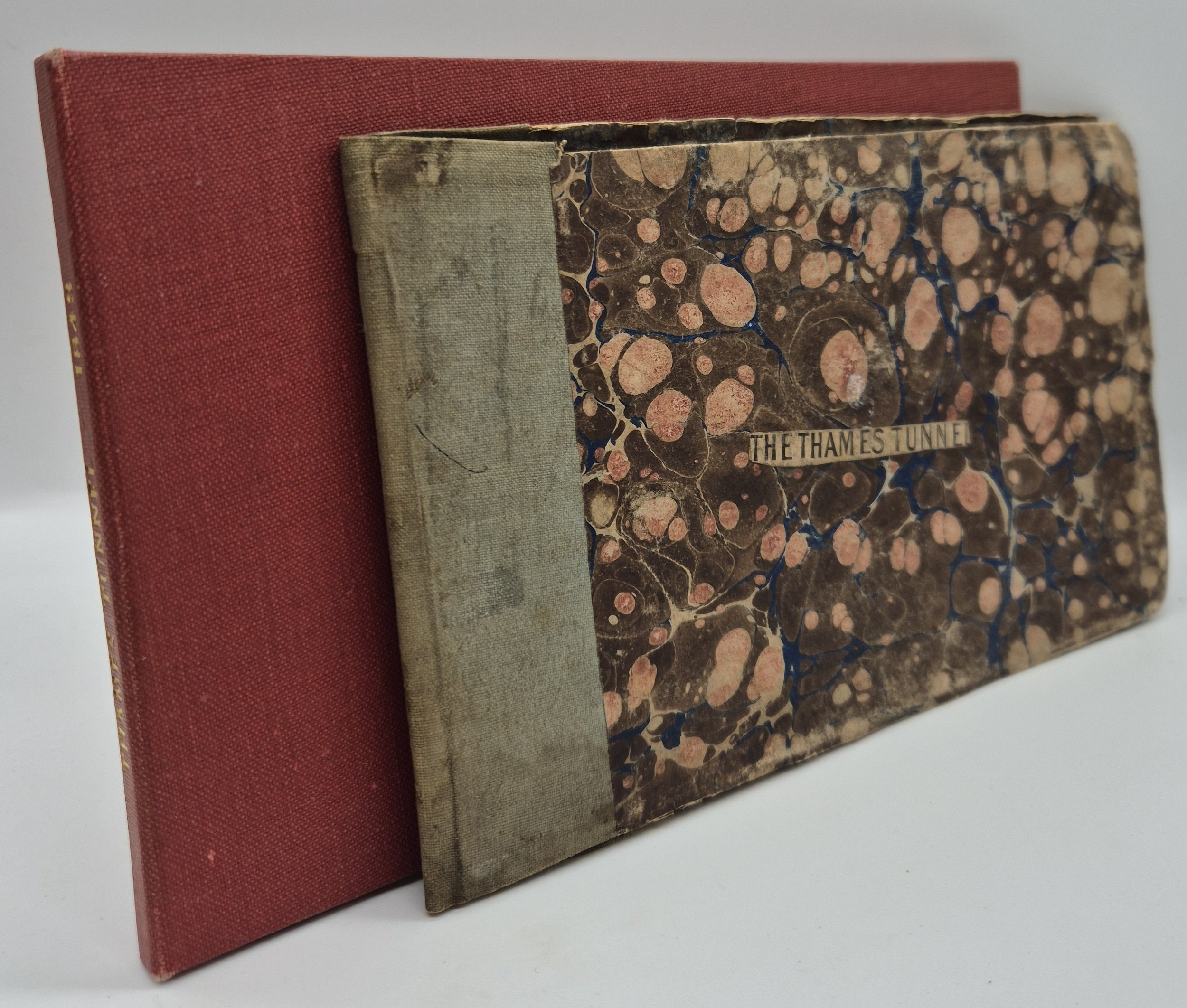 Image 2 of 4
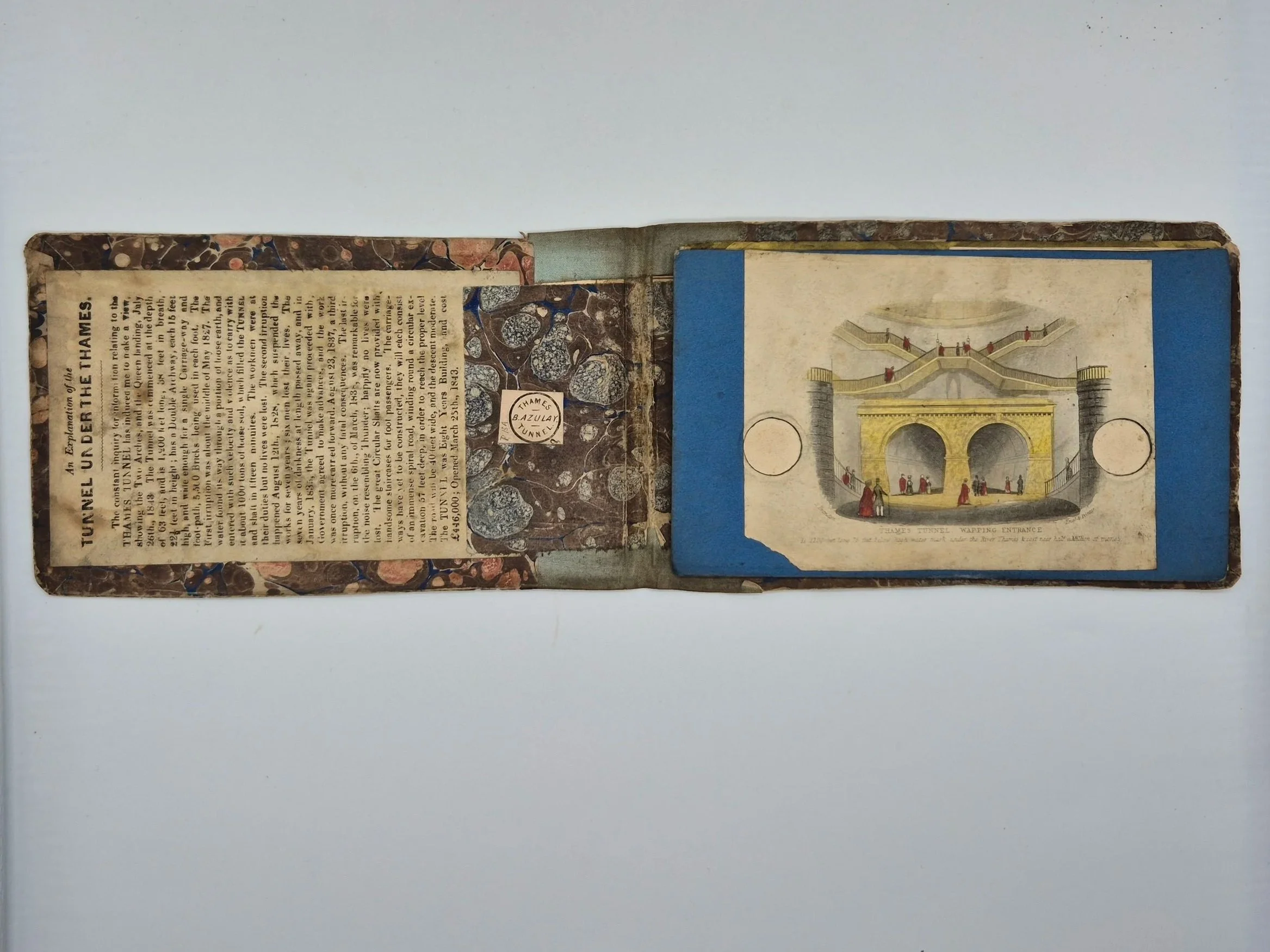 Image 3 of 4
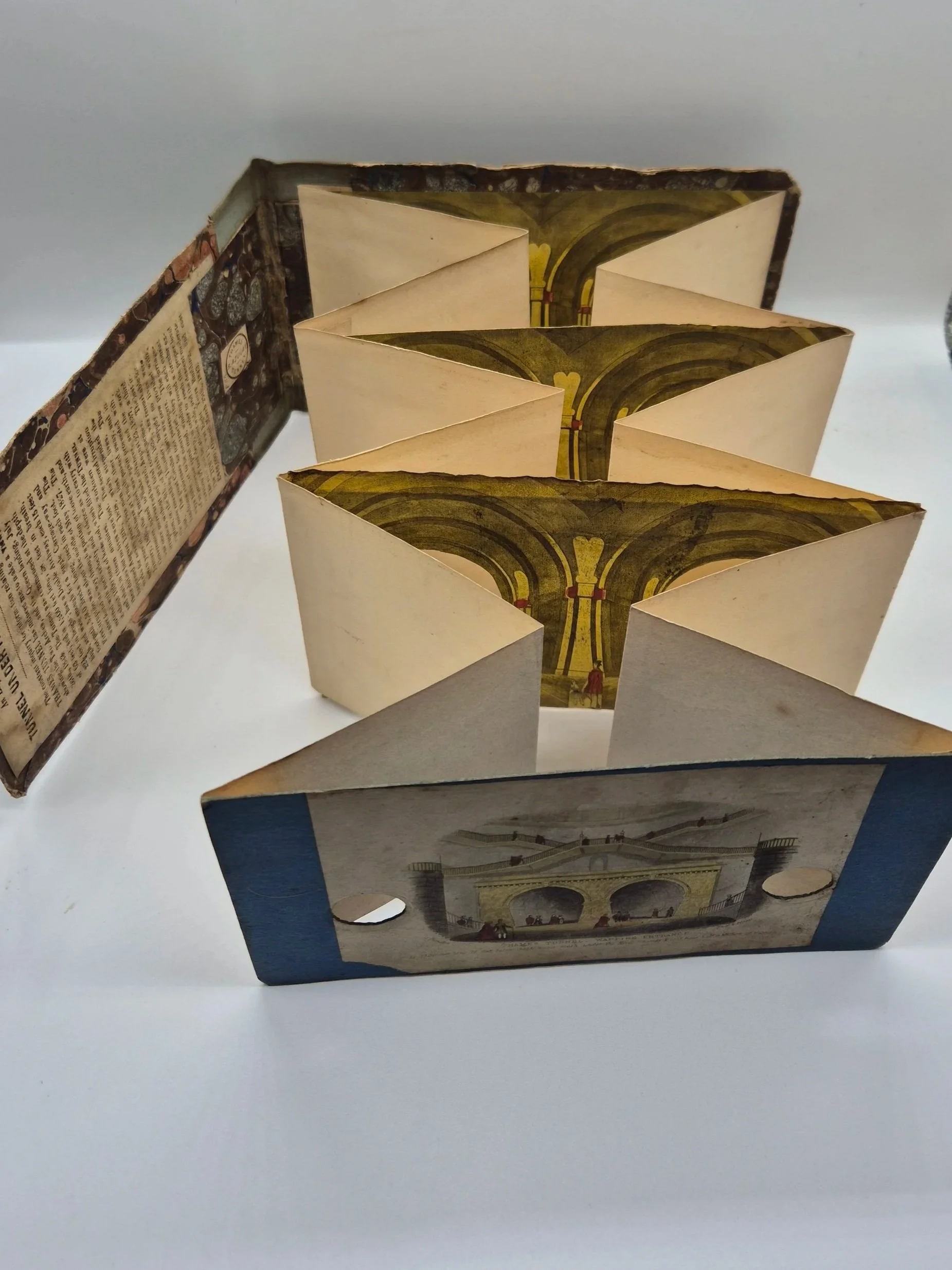 Image 4 of 4
THAMES TUNNEL; BRANDON, R.
An Explanation of the Tunnel under the Thames
[London]: R Brandon, [c. 1843]
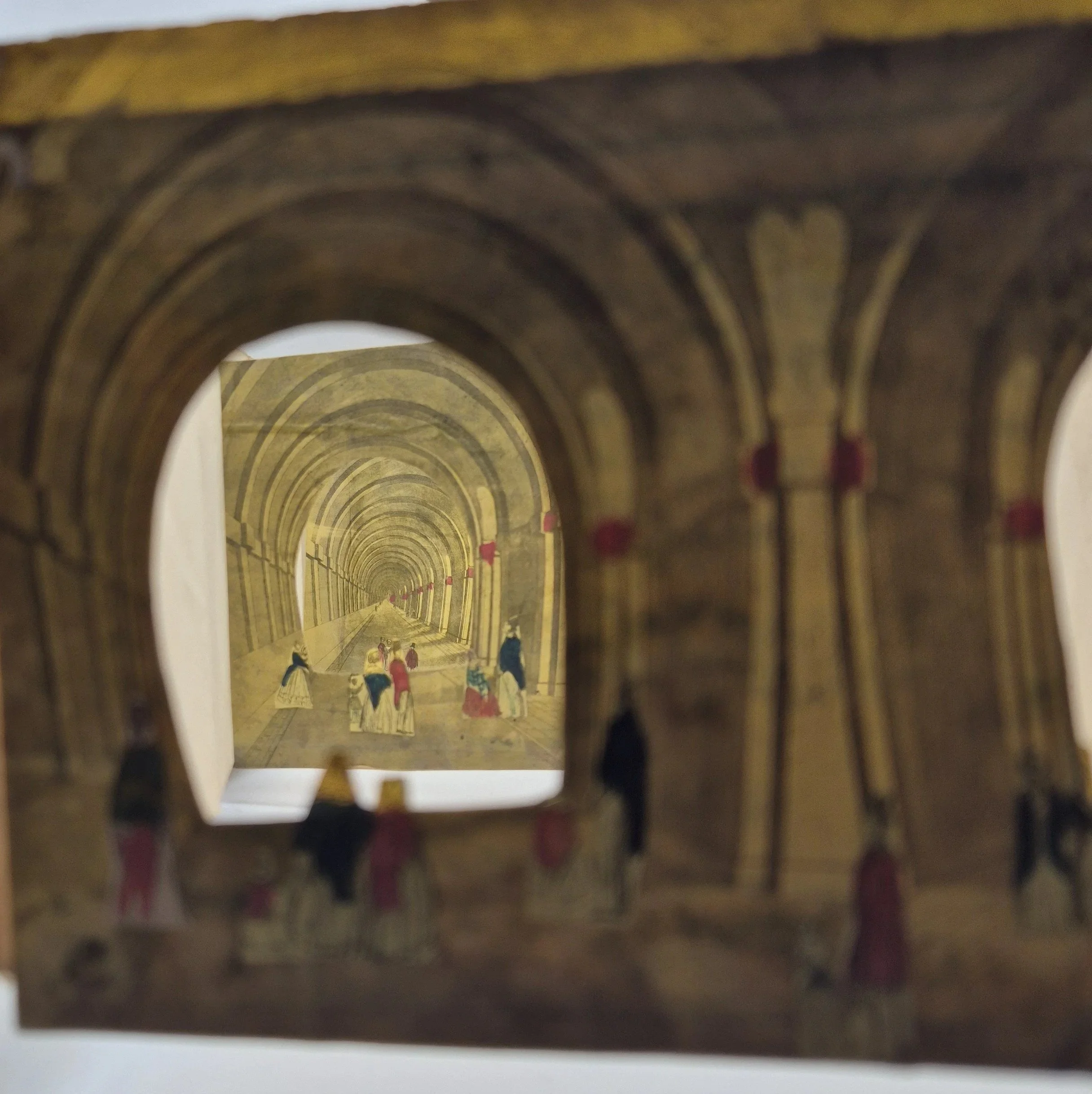
A concertina peepshow book, folding to a small oblong 8vo (18 x 11cm approx); comprised of pale blue cloth over marbled card covers; paper ‘The Thames Tunnel’ label affixed to upper cover; four handcoloured scenes enclosed between folding paper sections; the first, showing the Wapping entrance, affixed onto blue card with two ‘peepholes’; printed description to inner cover; the scenes extending to approximately 50cm in length; card covers rubbed, nicked and beginning to peel in places; some stains to the cloth backstrip; even mottling to inner description; some marking, bubbling and creasing to the scenes, but still very good overall; contained within a custom-made red cloth flapcase with ‘Thames Tunnel - 1848’ in gilt to backstrip.
A scarce example of this paper peepshow showing Brunel’s Thames Tunnel, described at the time as the ‘Eighth Wonder of the world’.
It was in 1818 when Marc Isambard Brunel (1769-1849) invented the tunnelling shield, a revolutionary advance in tunnel construction which would allow for a large protective structure to surround diggers and thus allow the excavation of a tunnel between Rotherhithe and Wapping. Securing investment from a number of high-profile figures including the Duke of Wellington, construction began in 1825, and after a number of setbacks including floods, fires and leaks of methane and hydrogen sulphide gas, the project was finally completed in November 1841, opening to the public on the 25 March 1843. Fitted with spiraling staircases, it became a hugely popular tourist destination, with over two million visitors in the first year alone, each paying a penny to pass through the famous archways.
The tunnel soon became one of the most popular subjects for British paper peepshows, with the two foremost sellers being Bondy Azulay and Brandon, as in the present example. Intended as a souvenir or gift item, the work itself is rather crude, with the V&A identifying the pasted figures as being taken from a construction sheet in the Noble Collection at the London Metropolitan Archives, and calling it “cheap touristic tat”. Nonetheless, these peepshows proved extremely popular, and came with enclosed information describing facts and figures of the tunnel and its construction.
Ephemeral items such as these are hard to find, with just two institutional holdings located, both in the UK.
THAMES TUNNEL; BRANDON, R.
An Explanation of the Tunnel under the Thames
[London]: R Brandon, [c. 1843]
A concertina peepshow book, folding to a small oblong 8vo (18 x 11cm approx); comprised of pale blue cloth over marbled card covers; paper ‘The Thames Tunnel’ label affixed to upper cover; four handcoloured scenes enclosed between folding paper sections; the first, showing the Wapping entrance, affixed onto blue card with two ‘peepholes’; printed description to inner cover; the scenes extending to approximately 50cm in length; card covers rubbed, nicked and beginning to peel in places; some stains to the cloth backstrip; even mottling to inner description; some marking, bubbling and creasing to the scenes, but still very good overall; contained within a custom-made red cloth flapcase with ‘Thames Tunnel - 1848’ in gilt to backstrip.
A scarce example of this paper peepshow showing Brunel’s Thames Tunnel, described at the time as the ‘Eighth Wonder of the world’.
It was in 1818 when Marc Isambard Brunel (1769-1849) invented the tunnelling shield, a revolutionary advance in tunnel construction which would allow for a large protective structure to surround diggers and thus allow the excavation of a tunnel between Rotherhithe and Wapping. Securing investment from a number of high-profile figures including the Duke of Wellington, construction began in 1825, and after a number of setbacks including floods, fires and leaks of methane and hydrogen sulphide gas, the project was finally completed in November 1841, opening to the public on the 25 March 1843. Fitted with spiraling staircases, it became a hugely popular tourist destination, with over two million visitors in the first year alone, each paying a penny to pass through the famous archways.
The tunnel soon became one of the most popular subjects for British paper peepshows, with the two foremost sellers being Bondy Azulay and Brandon, as in the present example. Intended as a souvenir or gift item, the work itself is rather crude, with the V&A identifying the pasted figures as being taken from a construction sheet in the Noble Collection at the London Metropolitan Archives, and calling it “cheap touristic tat”. Nonetheless, these peepshows proved extremely popular, and came with enclosed information describing facts and figures of the tunnel and its construction.
Ephemeral items such as these are hard to find, with just two institutional holdings located, both in the UK.